
Standard 2
Forest to Landscape, Structure, and Function
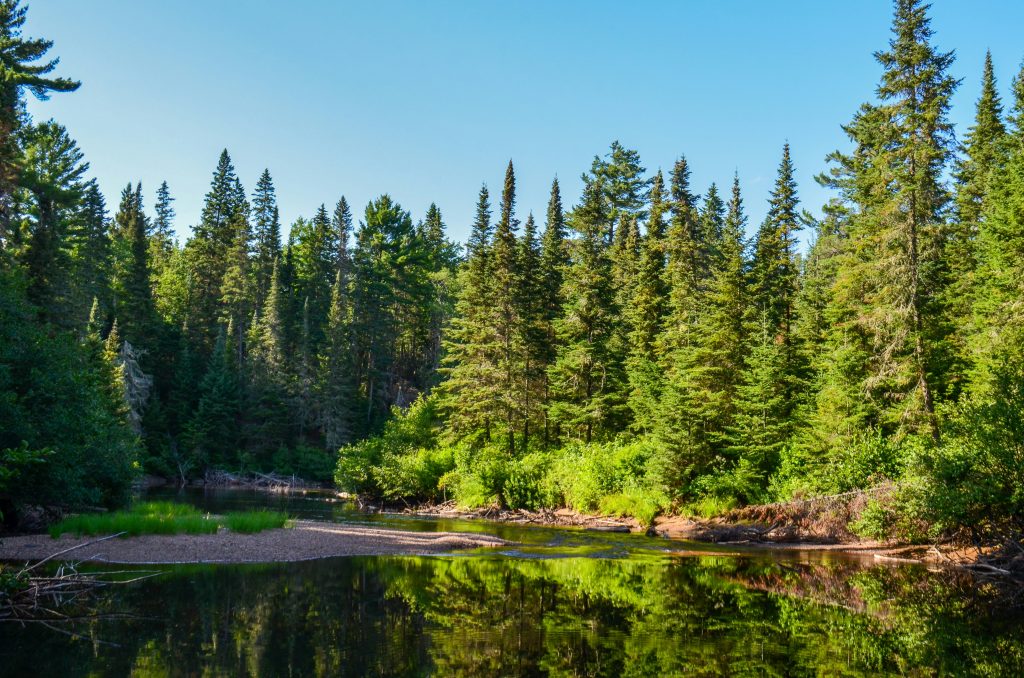
Canada’s forested ecosystems are diverse and complex systems arising out of the interaction between living and nonliving components over time. Knowledge of composition, structure and function of forested ecosystems at scales ranging from aggregates of stands to landscapes is essential to describe and evaluate current conditions, predict the effects of environmental change, and practice conservation and management.
Availability
- All online modules will run 3 times a year, generally coinciding with the Fall, Spring and Summer academic terms. Course start updates can be found here.
- Individuals’ week-to-week progress will be managed through regular communication with the instructor.
- Standard 2 modules may be made available to individuals outside of the coordinated intake cycle dates – contact admin@cif-ifc.org to inquire.
Relevant Content
- Appreciation of the forest health agents (fire, insects, disease, harvest etc.) and the effects of such agents to silviculture.
- Biological diversity, genetic diversity.
- Components and processes of ecosystems.
- Climate patterns and processes, causes and effects of climate change.
- Ecological concepts and principles.
- Habitats and living organisms related to the forested ecosystem.
- Interdependency and interaction between biotic and abiotic, forest and nonforest components of ecosystems.
- Natural disturbance processes and agents.
- Principles and applications of ecological classification.
- Role of agents of forest change in forest ecosystems.
- Resource cycles and their storage (e.g. Carbon, water, biogeochemical, etc).
- Soil properties, productivity, and applications for forest management.
- Watershed patterns, processes and classifications.
Module Content
Module 2.1
Describe the components, characteristics, and processes of forest ecosystems and how they interact
Module 2.2
Explain influences and outcomes of agents of change on forests and landscapes
Module 2.3
Describe and apply models to articulate present and future stand conditions
Module 2.4
Explain and apply the concept and measures of diversity
In Partnership with